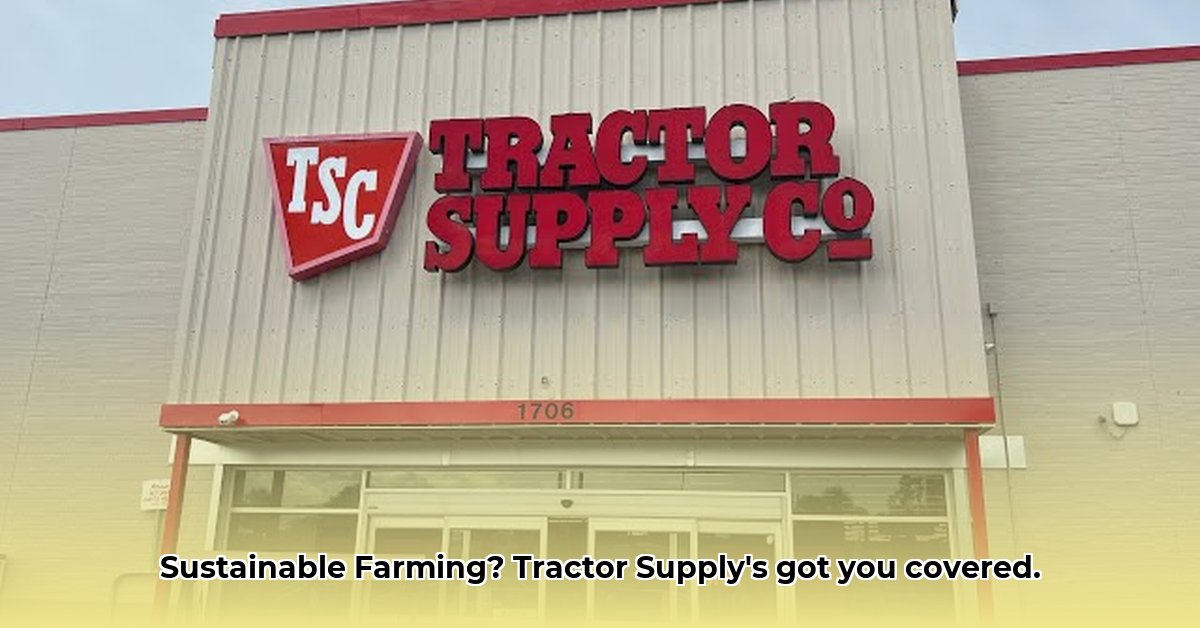
Tractor Supply Company (TSC) stores are readily accessible across Alabama, serving as vital resources for farmers and gardeners. This article explores TSC's role in supporting sustainable agriculture, detailing product offerings, analyzing their sustainability efforts, and providing a practical guide for maximizing sustainable practices. For those interested in alternative farming methods, check out this guide on chicken tractors.
TSC's Product Offerings and Accessibility in Alabama
TSC offers a wide array of products beneficial for sustainable agriculture in Alabama. From organic seeds and fertilizers 1 to durable tools and fencing, the options are extensive. Many livestock feeds emphasize natural ingredients, although careful label reading is crucial. The widespread presence of TSC stores across the state ensures convenient access for farmers of all sizes, a significant advantage for those in rural areas or with limited access to specialty suppliers. This accessibility is a key strength, enabling broader adoption of sustainable practices. However, the sheer volume of products warrants careful consideration to truly identify those promoting sustainability.
TSC's Role in Supporting Sustainable Practices: An Analysis
While TSC provides many products supporting sustainable practices, its overall contribution remains complex. The availability of clearly certified organic options might be less than ideal for some, and transparency regarding the environmental impact of their supply chain requires improvement. While TSC's extensive product catalog and accessibility are strong points, a more transparent approach to sourcing and production methods would significantly enhance its sustainability profile.
A key area for improvement is increased transparency regarding supply chain practices and product sourcing. A comprehensive sustainability audit encompassing the entire supply chain is recommended; this audit would pinpoint areas needing improvement, leading to more environmentally responsible procurement strategies. Focusing on suppliers with proven ethical and sustainable practices would be a significant step forward.
Furthermore, clearer and more detailed product labeling—easily identifying items made from recycled materials or those supporting fair-trade practices—is crucial. This empowers consumers to make informed, environmentally conscious choices. The current information available is insufficient for truly informed sustainable purchasing choices.
Practical Guide for Sustainable Farming with TSC
This section provides actionable steps for utilizing TSC effectively for sustainable farming:
Become a Savvy Label Reader: Scrutinize product labels. Look for certifications like USDA Organic, indicating adherence to sustainable production standards. Other relevant certifications exist depending on the product; pay close attention to details for complete transparency.
Engage TSC Staff: Don't hesitate to ask questions. TSC staff often possess valuable agricultural expertise. Inquire about product origins, environmental considerations, and sustainable alternatives. Their knowledge can significantly contribute to responsible purchasing decisions.
Cost-Effective Sustainable Practices: Sustainable farming doesn't have to be expensive. Invest in durable, long-lasting tools to minimize waste. Prioritizing products with smaller environmental footprints—even with potentially higher initial costs—often yields long-term cost savings and significant environmental benefits.
Advocate for Change: Contact TSC directly to express your preferences for more sustainable product offerings and clearer labeling. Your feedback directly influences future product selections and company policies. Communicate your support for transparent and ethical sourcing practices.
Conclusion: Collaboration for a Greener Future
The future of sustainable agriculture in Alabama depends on collaborative efforts between TSC, farmers, and the wider community. By working together and demanding transparency, we can cultivate a more resilient and environmentally responsible food system. While TSC offers considerable potential, continued improvement in transparency, supply chain sustainability, and product labeling is vital to fully embrace their role in a sustainable agricultural future. The potential is substantial, but realizing it necessitates dedication and a commitment to positive change. This necessitates a continual dialogue between consumers, retailers, and agricultural practitioners.
Key Takeaways:
- TSC provides a wide range of products relevant to sustainable farming practices.
- Effective sustainable sourcing from TSC requires careful label reading and proactive communication with staff.
- Cost-effective sustainable farming is achievable through strategic product selection and efficient resource management.
- Actively advocating for greater sustainable product availability at TSC involves providing direct feedback and participation in community discussions.
Tractor Supply Centre Al
Content about tractor supply centre al (Auto-generated fallback due to API error).
Tractor Supply Centre Al
Content about tractor supply centre al (Auto-generated fallback due to API error).